

Personalised retirement advice from Brisbane-based advisers
Retirement planning is about more than numbers. It’s about knowing when you can stop working, how long your money needs to last, and what income you can rely on year after year. Our Brisbane retirement advisers help you understand your options, structure your finances with confidence, and turn long-term goals into a retirement that feels steady, realistic and enjoyable.
Solace Financial is an award-winning team based in Brisbane CBD. We take a holistic approach to retirement planning, covering superannuation strategy, investment management, Age Pension and Centrelink entitlements, and tax-effective retirement income planning. Our role is to remove uncertainty and help you feel confident about your financial future. We begin with a simple, obligation-free initial call to understand your situation and outline a clear path forward.
When can I retire?
There’s no single retirement age that applies to everyone. When you can retire depends on the lifestyle you want in retirement and the financial resources available to support it. The figures below provide general benchmarks to help you understand how your own situation compares.
Quick facts for Brisbane retirees
-
ASFA comfortable annual income: $78,566 per year for a couple
-
Comfortable retirement balance: $630,000 – $730,000 in super (ASFA Comfortable Standard)
-
Age Pension (couples): Up to $1,810.40 per fortnight (indexed September 2026)
-
2026/27 concessional contribution limit: $32,500 (including carry-forward opportunities)
How much income do you need each year retire in Australia?
The question of how much you need to retire is the most common and most important one we address. While the precise figure is personal, we’ve helped thousands of people retire and the table below reflects our real-world experience here in Brisbane, showing what different lifestyles typically cost a retiree in 2026.
| Lifestyle | Single (pa) | Couple (pa) | What This Lifestyle Covers |
|---|---|---|---|
| Modest | ~$50k | ~$70k | Covers day-to-day living costs and occasional local travel. Similar to the official ASFA ‘Modest’ standard. |
| Comfortable | ~$60k | ~$80k | Our benchmark. Covers day-to-day living, running a reliable car, plus enough room for an overseas holiday every couple of years. This aligns closely with the ASFA ‘Comfortable’ standard. |
| Great | ~$90k | ~$120k | Allows for annual international travel, frequent dining, regular property maintenance, and a higher standard of living without significant financial constraints. |
| Luxury | ~$180k | ~$250k | Provides complete financial freedom, premium travel experiences, and flexibility to meet any unexpected costs without stress. |
Most retirees sit comfortably in the “comfortable lifestyle” range, where day-to-day living costs are covered and there’s enough room in the budget for an overseas holiday every couple of years. That’s our benchmark for what “comfortable” really means. If you’d like to understand where your current position sits against these benchmarks, we can walk through it with you in a complimentary initial call.
The savings needed to fund your goal
The amount of retirement savings you’ll need to fund this lifestyle is highly specific and depends on several factors:
-
Investment Strategy: Your risk profile and the returns your investments can reasonably generate.
-
Age Pension Maximisation: The figures above assume that we maximise any Age Pension entitlements you’re eligible for, which can make a meaningful difference to your yearly income.
-
Lump Sum Requirement: As a general guide, the lump sum required to fund a comfortable lifestyle (for a single homeowner) can be around $630,000 and for a couple $730,000, assuming you own your home and receive a part Age Pension.
The most valuable insight we offer is calculating your specific lump sum requirement. We use detailed long-term modelling to accurately determine your target figure, ensuring you have the confidence to retire when you choose.
The need for professional retirement planning
Navigating these constantly changing thresholds and contribution caps is exactly why generic advice falls short. Understanding these rules is essential, but transforming them into a secure, sustainable income strategy requires a proven, professional framework. That’s why we guide every client through our reliable approach.
Our unique four-step retirement journey
Solace Financial guides your path to retirement success through a proven, repeatable process. We specialise in taking complex financial decisions and transforming them into a clear, actionable roadmap designed to achieve your specific retirement goals.
Book a ConsultationDefine your retirement blueprint
We start by defining your retirement timeline and retirement goals. This step looks beyond the numbers to assess your aspirations, life stage, and financial situation. We create a comprehensive vision for your financial future.
Design the income & tax strategy
This is where we apply professional advice to the technical challenges. We design the optimal mix of superannuation strategies, age pension optimisation, and investment assets to create sustainable income. Our focus is on tax minimisation and managing risk.
Secure the foundation & fund action
We coordinate the practical implementation, focusing on effective asset allocation and structuring your retirement funds. This ensures your retirement savings are securely positioned, enabling the smooth transition to retirement and the funding of your financial plan.
Sustain your confidence & adapt
We provide ongoing support and regular reviews to ensure your plan remains current. This includes adapting your investment strategy to market changes, providing estate planning guidance, and ensuring you have the right advice to make informed decisions throughout your retirement.
Case Study – How We Helped a Brisbane Couple Retire Confidently
Mark and Lisa, both age 60, approached us with a clear objective: retire at 65 with a comfortable retirement income of $80,000 per year. They had a combined super balance of $750,000, modest savings outside super, and a small remaining home loan.
Here’s the strategy we developed:
-
Super contribution planning
We used concessional, non-concessional, and catch-up contributions to meaningfully increase their super balance over their final working years. -
Investment strategy adjustments
Their portfolio was rebalanced to reduce sequencing risk as they approached retirement, without sacrificing long-term growth potential. -
Retirement income modelling
We modelled different scenarios to determine how they could sustainably achieve an $80,000 annual income using a mix of account-based pensions and diversified investment income. -
Age Pension considerations
With some structural adjustments, they became eligible for a small part Age Pension and the Seniors Health Card, helping reduce ongoing healthcare and living costs.
Outcome
By age 65, their combined super balance had grown to approximately $980,000.
Through a tailored investment and income strategy, Mark and Lisa were able to comfortably meet their goal of $80,000 per year, with projections showing their savings lasting well into their later years, even after factoring in inflation and market fluctuations.
For them, the greatest benefit wasn’t just the numbers, it was the confidence and clarity of having a retirement plan designed specifically around their goals.
Retirement planning services we offer in Brisbane
Our four-step process is underpinned by specialised expertise in the complex, constantly evolving areas of Australian retirement finance. Below is an overview of the comprehensive personal advice we offer, ensuring every aspect of your financial plan is covered.
Superannuation Strategies & Management
We help you make the most of your super in the years leading up to retirement. This includes contribution planning, fund structure reviews, tax optimisation, and transitioning your super into the tax-free pension phase at the right time.
- Optimising annual and carry-forward contributions
- Structuring investments within your fund for tax efficiency
- Transition to Retirement (TTR) strategy implementation
- Pension phase planning (Account-Based Pensions)
- Consolidation support for managing multiple funds
Retirement Income Planning
Your retirement savings need to last and provide a stable income. We design tailored income strategies that balance regular cashflow with long‑term sustainability, helping to reduce the impacts of sequencing risk. This may include account‑based pensions, annuity options, and diversified income streams to ensure confidence and security throughout retirement.
- Establishing and managing Account-Based Pensions
- Sustainable withdrawal strategies (ensuring longevity)
- Long-term income modelling and cash flow projections
- Managing sequencing risk (protecting capital during market downturns)
Tax planning in retirement
Retirement can be one of the most tax‑efficient stages of life, if structured correctly. We help reduce tax on investment income, manage withdrawal strategies, and ensure your assets are positioned to take full advantage of the tax‑free pension environment. Reduce your tax exposure so more of your retirement savings work for you, not the ATO.
- Reducing tax on super earnings and withdrawals
- Timing asset sales and withdrawals for optimal tax outcomes
- Managing capital gains (CGT) implications
- Using offsets and tax credits effectively
Age Pension and Centrelink guidance
Even if you expect to be self-funded, understanding the rules around the Age Pension and Commonwealth Seniors Health Card can make a meaningful difference. We help you navigate asset and income tests, structure finances appropriately, and maximise your possible entitlements. As experienced professionals, we help you navigate eligibility to maximise your government benefits.
- Comprehensive eligibility checks for the Age Pension and CSHC
- Structuring assets and financial position for better outcomes
- Understanding deeming rates and how they affect your entitlements
- Ongoing reporting and assistance with Centrelink requirements
Investment strategy in retirement
Retirement investing is different from wealth building. We build investment portfolios that reduce sequencing risk, protect against market downturns, and support lifetime income needs, while still allowing for long‑term growth. All carefully tailored to your personal goals and retirement vision. We adjust your asset allocation to balance growth with the stability needed for reliable income.
- Adjusting risk profiles as you approach and enter retirement
- Diversified income assets and fixed interest solutions
- Balancing stability and growth for long-term capital preservation
- Providing ongoing, tailored investment advice
Aged care and healthcare planning
Planning for future care needs gives your family and you peace of mind and financial certainty.
- Understanding funding options (e.g., Refundable Accommodation Deposit vs. Daily Accommodation Payment)
- Planning for future care needs and ensuring funds are accessible
- Structuring assets to protect against Means Tested Fees
Estate and Legacy Planning
Estate planning is essential for protecting your legacy. We work alongside your solicitor to ensure your super, investments, pensions, and beneficiary nominations are tax‑effective and structured according to your wishes. For many clients, this also includes intergenerational wealth transfer and philanthropic goals, so you can leave a lasting impact. Ensuring your legacy is protected and your wishes are carried out effectively.
- Reviewing and managing binding and non-binding beneficiary nominations
- Coordinating your financial plan with your legal adviser for wills and powers of attorney
Insurance & risk management
As you move towards retirement, insurance needs change. We review your life, TPD, income protection arrangements, and health cover to ensure you’re appropriately protected without paying for unnecessary policies as your financial position evolves.
Cashflow & budgeting
We help you understand exactly how much you can spend in retirement without compromising long-term security. This includes budgeting, cashflow modelling, spending plans, and “what-if” scenarios to give you confidence in your financial decisions.
Pre-retirement strategies to boost your retirement outcome
If you are still working, the years leading up to retirement can make a meaningful difference to your final super balance and tax position. We specialise in implementing these high-impact strategies:
| Strategy | Why is this strategy important | Key benefit |
|---|---|---|
| Super contribution strategies | Maximising super contributions can significantly improve your retirement balance. This may include concessional contributions, non‑concessional contributions, catch‑up rules, and strategic recontribution strategies designed to reduce estate planning taxes and enhance long‑term outcomes. | Tax reduction and super boost |
| Spouse contribution splitting | Super splitting allows couples to balance retirement savings between them, useful for equalising super balances, managing tax, and improving Centrelink outcomes. It’s a simple way to make sure both partners head into retirement on strong footing. | Tax savings and balance equity |
| Downsizer contributions | If you sell your home after age 55, you may be eligible to contribute up to $300,000 into super (per person) without impacting your contribution caps. Downsizer contributions can significantly boost your retirement savings and help shift more money into the tax-free pension environment. | Tax-free capital injection |
| Transition to retirement (TTR) | A Transition to Retirement strategy allows you to access part of your super while still working. This can help reduce tax, supplement income, or support a gradual move towards retirement without stepping back from work too quickly. | Income flexibility and super growth |
| Adjusting investment risk before retirement | As retirement approaches, managing risk becomes more important than chasing high returns. We help clients adjust asset allocations, reduce sequencing risk, and build a smoother transition into retirement so market volatility doesn’t derail long-term plans. | Risk management and stability |
| Reducing personal debt | Using surplus funds or structuring assets to clear high-interest personal debt (e.g., mortgage) before retirement is usually the highest-return investment you can make. | Cost reduction and cash flow |
| Optimising Centrelink & Pension eligibility | Even high-net-worth clients can benefit from understanding the rules around the Age Pension and Commonwealth Seniors Health Card. Structuring assets correctly can improve entitlements, reduce out-of-pocket costs, and support a more tax-efficient retirement. | Reduce ongoing retirement costs by structuring assets to improve entitlements |
These steps are designed to increase your retirement income, maximise your tax efficiency, and give you more flexibility later on in life. They are crucial for those aiming for a comfortable retirement.
2026 Superannuation & age pension rules
The rules around superannuation and retirement change regularly, so it’s important to work with the most current figures. Below is a simple summary of the key limits and thresholds.
Superannuation contribution limits (2026-27)
| Rule | 2026 Amount / Requirement | Notes |
|---|---|---|
| Concessional Contribution Cap | $32,500 per person, per financial year | Applies to each member of the couple. Includes employer SG, salary sacrifice, and personal deductible contributions. Carry-forward rules still apply if an individual balance is under $500,000 at 1 July. |
| Non-Concessional Contribution Cap | $130,000 per person, per financial year | Bring-forward rule allows up to $390,000 per person over three years, depending on each individual’s total super balance. |
| Transfer Balance Cap (TBC) | $2.1 million per person | This is the maximum each partner can move into the tax-free pension phase. Existing personal caps still apply for pensions started in earlier years. |
Age pension asset test limits (From July 2026)
| Situation | Full Pension Cut-Off | Part Pension Cut-Off |
|---|---|---|
| Single Homeowner | Assets under $333,000 | Assets cut off at $733,500 |
| Single Non-Homeowner | Assets under $600,000 | Assets cut off at $1,000,500 |
| Couple Homeowner (combined) | Assets under $499,000 | Assets cut off at $1,102,500 |
| Couple Non-Homeowner (combined) | Assets under $766,000 | Assets cut off at $1,369,500 |
These rules influence how much income you can draw from super, how your assets are assessed for the Age Pension and how long your retirement savings are likely to last.
Common retirement planning challenges (and how we solve them)
Retirement brings unique financial challenges. Here’s how we help our clients navigate them with confidence.
Will my money last? How can I be sure I won’t run out of money?
Longevity-Proof Income Strategy: We build cash flow models that stress-test your capital against inflation, market volatility (Sequencing Risk), and living beyond 95. We implement strategies like bucket planning to ensure guaranteed cash reserves are always available, protecting your growth assets during market downturns.
How can I minimise the tax I pay on my super and my investments in retirement?
Tax-Effective Drawdown Planning: We advise on the optimal timing and mix of withdrawals from your tax-free super pension account versus non-super assets. We employ sophisticated strategies like Recontribution to convert taxable components to tax-free components, ensuring your income is as tax-efficient as legally possible.
How do I maximise my Age Pension and Centrelink entitlements without losing my savings?
Centrelink and Asset Optimisation: We strategically structure your assets (e.g., investing in exempt assets, reviewing assessable vs. non-assessable income streams) to ethically maximise your Age Pension eligibility under the combined Income and Assets Tests. We ensure you receive the full benefits and concessions you are entitled to.
What should I do with my super when I retire? Do I need to move it?
Seamless Pension Phase Transition: We guide you through converting your Super Accumulation account into a tax-free Account-Based Pension (ABP). If you are still working, we can implement a Transition to Retirement (TTR) strategy to boost super while maintaining income. We ensure all legislative caps are managed.
How do I protect my savings from the next share market crash?
Sequencing Risk Mitigation: We manage your portfolio’s exposure during the critical “retirement risk zone” (the 5 years before and after retirement). This is achieved through proper asset allocation and using defensive assets (like cash/fixed interest) to fund withdrawals, protecting your long-term growth assets from being sold at market lows.
How do I manage aged care costs or future health expenses?
Aged Care Funding & Cash Flow Modelling: We integrate potential future aged care (e.g., RAD/DAP payments, Home Care Packages) into your overall financial plan. We model the impact of selling or retaining the family home to determine the most financially sound, Age-Pension-favourable funding option.
I still have a mortgage/debt. Should I use my super to pay it off?
Debt vs. Investment Analysis: We run a cost-benefit analysis comparing the long-term, tax-free growth lost in super versus the interest saved on the mortgage. This is a crucial decision, and we help you determine the optimal strategy for your cash flow, tax position, and Age Pension eligibility, rather than making a decision purely based on emotion.
What does retirement advice cost?
People often want to understand exactly how financial advice fees work before taking the next step. At Solace Financial, we believe in keeping our fees simple and transparent, ensuring you know the cost and value upfront.
Our simple two-part fee structure
| Fee Type | What it Covers | Fee Structure |
|---|---|---|
| Upfront fee (initial strategy) | Creation of your comprehensive financial plan and Statement of Advice (SOA), tailored to your unique circumstances. | Fixed price (quoted upfront) |
| Yearly fee (ongoing management) | Investment management, proactive monitoring, regular reviews, adaptation to legislative changes, and continuous risk management. | Percentage (of investments managed) |
Get your personalised retirement planning quote by getting in touch with an adviser.
Why Brisbane Retirees Choose Solace Financial
Our Brisbane retirement planners


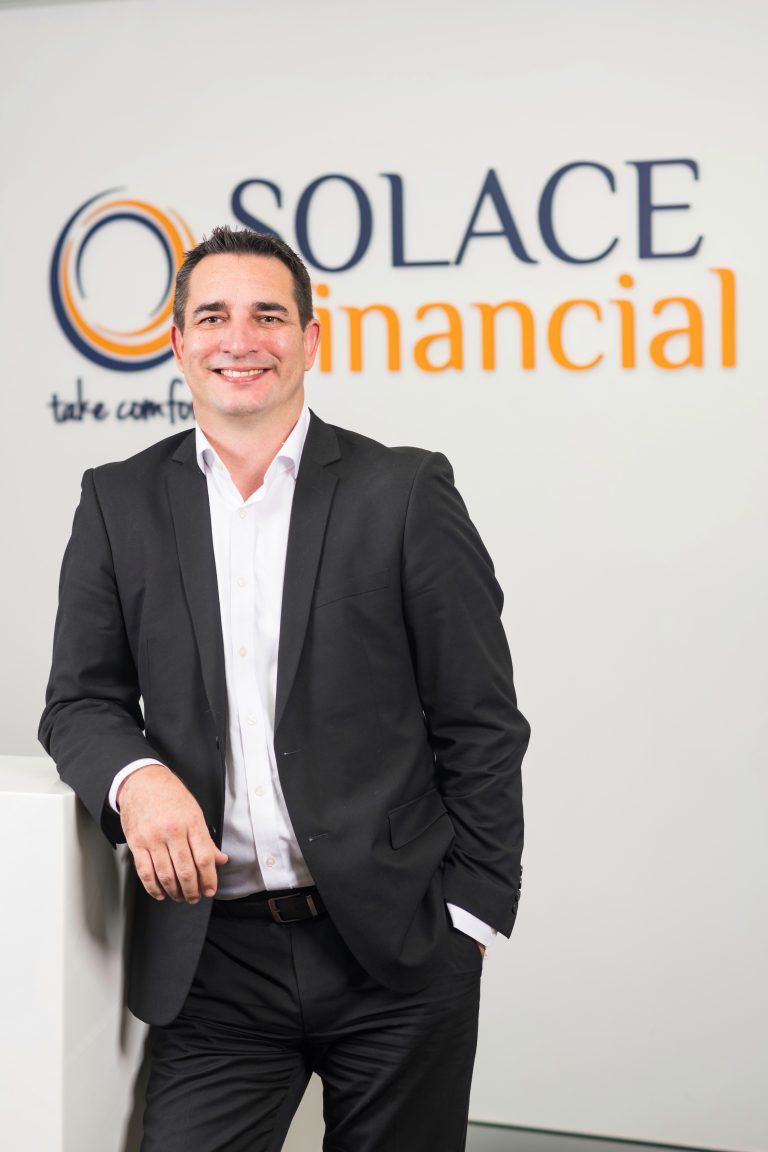

Scott Quinlan
Principal / Financial Adviser
Masters of Financial Planning
Bachelor of Commerce
CFP®
I hold a Master’s degree in Financial Planning from Griffith University along with a Bachelor of Commerce from the University of Newcastle. I’m a Certified Financial Planner (CFP®) and a member of the Financial Planning Association of Australia.
Stephen Horton
Principal / Financial Adviser
Bachelor of Commerce
CFP®
I am a Certified Financial Planner (CFP) and a member of the Financial Planning Association of Australia. I have a degree in Commerce (Accounting) from the University of Queensland and an Advanced Diploma in Financial Planning.
Giles Stratford
Principal / Financial Adviser
Masters of Financial Planning
AFP®
I hold a Masters in Financial Planning and a Member of the Financial Planning Association.
Joel Carty
Certified Financial Planner – CFP®
Master of Financial Planning – MFP
Chartered Tax Adviser – CTA
I hold a Master’s degree in Financial Planning from the University of the Sunshine Coast and am a Certified Financial Planner (CFP®). Additionally, I am a Chartered Tax Adviser (CTA) and a proud member of both the Financial Advice Association Australia and The Taxation Institute of Australia.
Frequently Asked Questions (FAQs)
FAQs for planning your retirement (the basics)
When should I start planning for my retirement?
Ideally, you should start formal planning five to ten years before your intended retirement date. This period is often referred to as the “last mile,” where even small, strategic changes – such as tweaking your super contributions, rebalancing your investment risk, or structuring assets – can result in a significant improvement to your final outcome. We specialise in helping clients maximise this crucial final window.
How much super do I need to retire comfortably?
There’s no single number that works for everyone. The right amount depends on your lifestyle goals, spending needs, and whether you’ll receive any Age Pension support. As a guide, many couples aim for an annual income of $70,000–$90,000 in retirement, which typically requires a super balance between $800,000 and $1.2 million. Personalised financial modelling gives the most accurate answer.
Can I retire on $500k?
Some can, especially with Age Pension access and careful planning. We model your income to check feasibility.
How do I create a reliable retirement income stream?
Most retirees use a combination of account-based pensions, diversified investments, and in some cases annuities. The right mix depends on your risk tolerance, income needs, and longevity considerations.
FAQs about Australian retirement rules & strategy
What’s the difference between super accumulation and pension phase?
In accumulation phase, your super is still being built and earnings are taxed at up to 15%. In pension phase, the earnings and withdrawals are generally tax-free, making it the most efficient phase of retirement.
When can I access my super?
You can access your super once you reach your preservation age (which is now 60) and retire, or when you reach age 65, whether you’re still working or not. Some limited early access rules apply, but they’re tightly restricted.
What is a Transition to Retirement (TTR) strategy?
A Transition to Retirement strategy allows you to access part of your super while still working. It can help reduce tax, boost super contributions, or support a gradual move into part‑time work. TTR strategies are often used in the final years before retirement to increase take‑home income or accelerate retirement savings.
Will I qualify for the Age Pension?
Eligibility depends on income, assets, and your relationship status. Even if you don’t qualify at retirement, changes in your circumstances, such as portfolio structure or spending patterns, may make you eligible later on.
How do the Age Pension rules affect me?
Your income and assets influence your eligibility. Proper structuring can improve your entitlement.
Can I still receive the Age Pension if I have a high super balance?
Yes, it is possible to qualify for a part Age Pension even with a substantial super balance. This is primarily because your family home is excluded from the Centrelink Asset Test. Furthermore, specific investment structures and the timing of your Age Pension application can influence your eventual entitlement. We focus on maximising your overall net benefit, which sometimes involves restructuring assets to improve your Age Pension position.
What is sequencing risk and how do you protect against it?
Sequencing risk is the danger that poor investment returns early in your retirement, when your balance is largest and you are drawing down funds, will permanently damage your portfolio’s ability to recover. We mitigate this risk using strategies like asset segregation (holding higher-risk assets in super where drawdowns are taxed at 0%) and holding a cash buffer to avoid selling growth assets during market downturns.
What happens to my super when I die?
Super doesn’t automatically form part of your Will. Instead, it’s paid according to your beneficiary nominations and super fund rules. Reviewing these regularly helps avoid unexpected tax outcomes and ensures your wishes are carried out.
FAQs about working with our firm
Do I need a financial adviser in retirement?
For most retirees, yes. While accumulating wealth requires one skill set, successfully drawing down that wealth requires another. The financial complexities only increase in retirement due to:
-
Tax Efficiency: Managing tax between super and non-super assets.
-
Sequencing Risk: Protecting your portfolio from early market downturns.
-
Centrelink Rules: Maximising your Age Pension or other entitlements as rules change.
-
Longevity Risk: Ensuring your money lasts as long as you do.
We provide the expertise and ongoing oversight to manage these risks, giving you greater confidence and peace of mind.
Do you offer retirement planning for self-funded retirees?
Yes. Many of our clients are self-funded or nearing that point. We help structure portfolios, manage tax, model long-term income, and ensure super and non-super assets work together to support a stable, sustainable retirement.
How often should I review my retirement plan?
We recommend reviewing your plan at least once a year, or sooner if your circumstances change, such as receiving an inheritance, selling an asset, changing jobs, or market conditions shifting. Regular reviews help keep your plan aligned with the latest super, tax, and Centrelink rules.
FAQs about getting started
How do I choose the right financial adviser for retirement in Brisbane?
When choosing an adviser, focus on specialisation and fee transparency. Look for an adviser who:
-
Specialises in Retirement: Not general wealth management, but specifically retirement income, Age Pension, and tax strategy.
-
Offers Fixed Fees: Insist on a fixed, written fee quote upfront, so you know the exact cost before committing (like our firm offers).
-
Demonstrates Local Knowledge: An adviser familiar with local Brisbane trends and the specific needs of Queensland retirees can provide more relevant advice.
How can I pay for your retirement advice?
You can pay our upfront financial planning fee directly from your superannuation (in most cases), which can be tax-effective and help preserve your cashflow. Alternatively, you can pay via bank transfer or credit card. Our ongoing fees are typically deducted directly from the investments we manage on your behalf.
What should I bring to my first meeting with a retirement financial adviser?
The first meeting is about discovery, so you don’t need to over-prepare! Bring the documents that provide the clearest picture of your current situation:
-
Superannuation statements: The latest statement for all super funds.
-
Investment portfolio summaries: Details of any shares, managed funds, or investment properties.
-
Income/asset information: Details of any non-super income streams and other major assets (like your home value).
-
Centrelink documents (if applicable): Any recent correspondence or statements.
Most importantly, bring a clear idea of what your ideal retirement looks like and the key questions you want answered.
Stop guessing, start planning. Book your complimentary retirement planning consultation
If you’re ready to turn uncertainty into clarity, we’re here to help. Book a complimentary retirement planning consultation with Solace Financial and receive personalised guidance, clear strategies, and confidence about your financial future.
Address
Solace Financial House
Level 6, 97 Creek Street, Brisbane QLD 4000
GPO Box 980, Brisbane Qld 4001
Get Started
Enquire today and take the next step toward a secure, enjoyable retirement, tailored to your goals and lifestyle.
Solace Financial awards & recognition

IFA Business Outcome Leader of the Year Finalist 2025

IFA ESG Adviser of the Year Finalist 2025

IFA Financial Impact Team of the Year Finalist 2025

SMSF Adviser of the Year Finalist 2025

SMSF Investment Strategist of the Year Finalist 2025

SMSF Professional of the Year – Metropolitan Finalist 2025

AWMA Adviser of the Year – High Net Worth Winner 2025
Adviser of the Year – Aged Care 2026

AWMA Innovator of the Year – Financial Advice Finalist 2025

AWMA Adviser of the Year – High Net Worth Finalist 2025

AWMA Adviser of the Year – Aged Care Finalist 2025

AWMA Adviser of the Year – SMSF Finalist 2025

AWMA Adviser of the Year – Risk Finalist 2025

AWMA Adviser of the Year – Estate Planning Finalist 2025


IFA Transformation of the Year – Company Finalist 2023


IFA Transformation of the Year – Individual Winner 2023
IFA Business Outcome Leader of the Year Winner 2023
Retirement planning resources & guides
Not ready to book yet? We have a wealth of educational resources to help you continue your research.
- Superannuation retirement calculator
- Taxes on retirement income: Everything you need to know
- Best investments for retirement income in Australia
- Strategies to help bear inflation in retirement
- How to retire early in Australia
- Best retirement income streams & strategies to build wealth
- What is the best month to retire for tax purposes in Australia?
- How much super do I need to retire at 60?
- How much do you need to retire in Australia?
- Can inheritance be passed on without paying tax in Australia?
- Retiring with mortgage debt: Strategies and consideration for Australians
- When can i access my superannuation?
Take comfort in your financial future with Solace Financial