
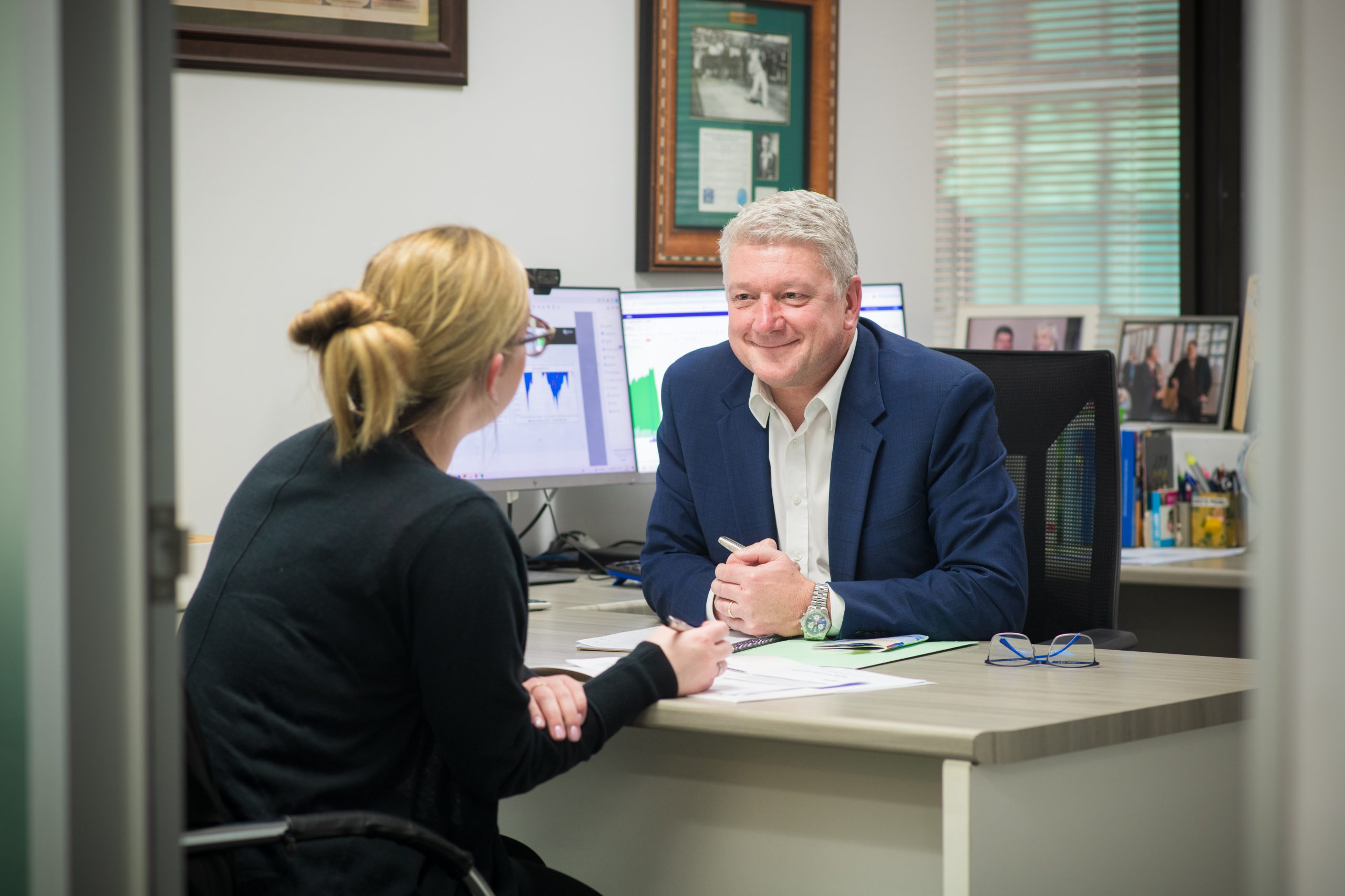
Independent financial advice for managing your inheritance
Receiving an inheritance can be a life-changing event, but deciding what to do with that inheritance is not always a straightforward process. Whether you inherit a family home, a share portfolio, superannuation death benefits, or a cash inheritance, the decisions you make in the short term will determine your long-term financial position.
Solace Financial is a Brisbane-based independent financial advisory business that has been helping inheritance clients manage their inheritance since 2013. If you’d like to discuss your inheritance before reading on, we’d be happy to book a free initial consultation with one of our financial planners.
Why getting advice early protects your inheritance
The majority of people do not inherit a large sum of money more than once or twice in a lifetime. This distinguishes it from other income sources in a fundamental way. There is no pay cycle, and there is no employer contribution. If the money is misallocated, there is no second chance. And to top it all, the timing of the inheritance is usually not good, making the chances of impulsive decisions even higher.
Getting professional advice early on does not mean you have to act immediately, but you get a clear picture of what the tax implications are and what opportunity costs are, in addition to what structural options are available to you.
What happens when you delay decisions on inherited wealth
The problem isn’t just the delay. A little time to grieve and get settled may be a good idea. The problem comes when there’s no structure to the delay. Inheritances languish in the wrong account, property remains uninsured or inadequately managed, and tax liabilities build up with no one keeping score.
If you have inherited a property, council rates, insurance, maintenance, and land tax do not stop until you decide what to do with the property. Inherited shares may be producing franked dividends, which must be declared. A death benefit paid into your bank account from a super fund is assessable income in certain circumstances, depending on the tax components of the death benefit.
The longer these details remain unresolved, the more complex and costly they become to reverse. Seeking early advice provides you with a holding strategy to prevent anything slipping through while you take the time you need.
How Solace Financial helps inheritance clients in Brisbane
Solace Financial is an independently owned and operated financial services company. This is important for inheritance clients to understand because it means the advice that we provide to you is not dependent on a bank or a product provider in any way, and it’s not dependent on a commission structure that we need to follow in providing that advice to you. When we recommend a strategy for your inherited assets, it’s a recommendation that’s based on your needs and your goals.
Our advisers deal with inheritance clients throughout Brisbane, and a lot of our clients come to us because they have inherited a large amount and don’t wish to put a foot wrong with it. The first step is to understand what you have inherited and how it is currently structured, and then align that with your overall goals and aspirations. Then we create a plan that takes into account tax, investment, super, estate planning, and Centrelink in a single plan rather than piecemeal.
How inherited assets are taxed in Australia
One of the first things people often want to know is if they have to pay tax on their inheritance. The quick answer is no, there is no tax to pay in Australia, and there is no such thing as an inheritance tax or a death duty. However, this does not mean that anything you inherit is tax-free, and this is dependent on what you inherit, how long you keep it, and what you eventually do with it. For a broader overview, you should read our guide to inheritance tax in Australia.
Capital gains tax on inherited property
When you inherit a property, you don’t pay any tax at the point of transfer. You pay capital gains tax when you eventually sell the property. The amount of CGT you pay depends on when you got the property and if it was your main residence.
If the property was the deceased’s pre-CGT asset (i.e., it was acquired before 20 September 1985) and it is the deceased’s home, you will not have to worry about CGT when selling the property, as long as you sell it within two years of the death, or it was not used to produce income during that period. If the property was acquired after 20 September 1985, then the cost base is the market value at the date of death, and CGT is applicable on the profit made from then.
The rules get more detailed if there was a partial rental or use in a business, and there are different rules if there was a trust involved. This is an area where getting advice before you sell can save you thousands, as the timing and structure of a sale directly impacts tax outcomes. More on exemptions and strategies in this area in our article on avoiding tax on inheritance. We cover more of the specific exemptions and strategies in our article on passing on inheritance without paying tax.
Tax on inherited shares, managed funds and super death benefits
Inherited shares and funds are treated in a similar manner to property in relation to CGT. The cost base is based on the time of acquisition of the shares, and the gain is calculated from either the original purchase price or the market value at the date of death, depending on the circumstances.
Super death benefits introduce another dimension. If you are a tax dependent on the deceased (i.e., a spouse or child under 18), the super death benefit is usually received tax-free. If you are a non-tax dependent (i.e., an adult child), the taxable portion of the death benefit can be taxed as high as 30 per cent plus the Medicare Levy. The tax-free and taxable components of the super fund determine the proportions that are assessable for tax, and these proportions vary from fund to fund.
For many Australians, the assumption is that just because it’s “their parent’s money,” it’s tax-free. This may not be the case for the adult child, and the sums can be substantial, particularly for superannuation funds that have been building for many years. Knowing the tax on super withdrawals can help you prepare for this.
How an inheritance can affect your Centrelink payments
If you are currently receiving an Age Pension, Carer Payment, JobSeeker, or any other Centrelink benefit, which is income-tested, then an inheritance can affect your payments from the day you receive it. Centrelink treats the inheritance as an asset, and your payments are then subject to the assets test, as well as the income test, which is a form of deeming.
You are required to inform Centrelink within 14 days of receiving the inheritance. If you fail to do so, you may be overpaid, and Centrelink recovers these overpayments, which may attract penalties. A modest inheritance can place you above the threshold for receiving a pension. Many are not aware that Centrelink benefits are not limited to the Age Pension. There are different thresholds and tests for different Centrelink benefits.
The practical problem here is that an inheritance might arrive at a time when the person is already living on the pension for cash flow needs. The loss of part or all of that pension is a big change. A financial adviser can help explain the effect of the inheritance on your Centrelink entitlements before you lodge your tax return, so that you can understand the effect and plan around it rather than being surprised by it.
What to do with your inheritance before making any big decisions
The best piece of advice that anyone who has just inherited a large sum of money can be given is to do nothing with it for a while. Invest the money in a high-interest savings account or term deposit, and make sure that the inherited assets are well insured and well maintained. One should not make any major purchases or commitments for the first three to six months.
Having a holding strategy in mind provides you time to assess your whole financial picture and seek advice so that when you do make a move, you’re thinking clearly rather than acting on emotion. Grief, family pressure, and the shock of a large amount of cash all play on your mind in ways you may not even realise.
At this stage, a good financial adviser can assist you in creating a map of your current financial situation, which includes your debts, superannuation savings, income, tax position, and long-term financial goals. This map will be the guide for all subsequent decisions. Our article on the best way to invest inheritance in Australia walks through these early-stage decisions in more detail.
Paying off debt versus investing your inheritance
This is one of the most common questions our clients have when they come to us about inheritance, and the answer depends almost entirely on what type of debt and what type of interest rate is involved.
When clearing non-deductible debt makes sense
You cannot claim this interest from debts such as your home loan or your car loan, and this is why they are non-deductible debts. This is because the interest you are paying on debts is a sure, after-tax expense. If you have a 6.2% interest rate on your home loan, paying off this loan is like earning 6.2% with no risk, and no investment offers this guarantee.
For most people, paying off high-interest non-deductible debt with inherited money has the greatest impact. Not only does it free up your cash flow, but it also eliminates your financial stress. Once your debts are paid off, you’re in a much better position to start investing or putting money into super.
Of course, paying off debt may not always be the best idea if it leaves you with no cash reserves. Life does not stop just because you inherited money, and having cash reserves for unexpected expenses is important. This decision becomes even more important if you’re close to retirement and still have a mortgage. We discuss the pros and cons of this in our article on retiring with mortgage debt.
Using an offset account to keep your options open
If you’re not yet ready to make a commitment to paying off your mortgage in full, or if you want to keep your options open, putting your inheritance in an offset account against your mortgage is a very smart intermediate solution, where you get the same benefits of paying off your mortgage in full, but with the added flexibility of having access to it if you change your mind.
This is especially useful if you are still awaiting advice or dealing with settling an estate and have not made a decision as to whether to invest the money elsewhere. You are given time without losing any interest.
Superannuation strategies for inherited money
Super is still one of the most tax-efficient structures available in Australia today, and adding inherited funds to super can be a powerful way to grow your retirement savings. The way that contributions are made is also quite specific, and getting this wrong can mean that you are subject to penalties for excessive contributions. A superannuation adviser in Brisbane can be a big help in this regard.
Non-concessional contribution caps and bring-forward rules
Non-concessional contributions (the contributions that you make from your own money after tax) are capped at $120,000 per financial year. If you are under the age of 75, you may be able to bring forward two years of contributions and contribute the full $360,000 in the first year.
In order to use the bring-forward rule, you need to ensure that your total super balance is under $1.9 million as at the previous 30 June. If your total super balance is between $1.68 million and $1.9 million, the amount that you can bring forward is reduced. If your total super balance exceeds $1.9 million, you cannot make any non-concessional contributions.
This is significant as many people inherit in their 50s and 60s and already have super balances that are quite high. A financial adviser can even determine exactly how much room you have and can time these contributions if necessary to ensure that you do not exceed the limit.
What to know if you inherit a super death benefit from a spouse
One of the most common inheritance types for pre-retirees and retirees is inheriting your spouse’s super, and it has its own set of rules that many people do not know about until it is too late.
If your spouse dies, the super benefit he or she receives can be transferred into your own superannuation account or be converted into a pension (income stream). If it’s converted into a pension, it will be counted against your own transfer balance cap, which is currently $1.9 million. If your deceased spouse was in pension phase and you were a reversionary beneficiary, the pension will be transferred to you after a 12-month waiting period and will be counted against your transfer balance cap.
The complexity comes in when the total of your pension and inherited benefit exceeds $1.9 million, and at that point, you are required to commute (convert back to accumulation phase) the excess. Money in the accumulation phase is taxed at 15% instead of the 0% incurred in the pension phase.
And then there’s the issue of what tax components are involved. Your spouse’s super fund has a tax-free component and a taxable component, which are transferred to you. If you subsequently leave your super, or if a non-dependant beneficiary (such as your adult children) inherits it, the components apply.
This is one area where generalised information may not be of much help. The interplay between balance caps, tax components, reversionary pensions, and your existing superannuation needs to be modelled to suit your specific circumstances. Getting this right at the time of inheritance can save you tens of thousands of dollars in the accumulation phase of your pension. Our retirement planning experts in Brisbane can help model this situation for clients in this exact situation.
Building a diversified investment strategy with your inheritance
After your debts are taken care of and your super is optimised, the next step is to figure out how you’re going to invest your remaining money in a manner that takes your tax liabilities into consideration. This may be a first-time investment management issue for many inheritance recipients.
Matching your investments to your life stage and risk tolerance
For example, a 52-year-old working professional inheriting $400,000 has a vastly different time frame to a 68-year-old retiree inheriting the same amount. The younger client may have a much higher allocation to growth investments like Australian and overseas shares, even though this means volatility in the short term, in order to capture higher returns in the long term. In contrast, the retiree needs to focus on income-producing investments and capital preservation, as he or she needs the money now.
Furthermore, risk tolerance isn’t just about age. It’s about what you have, what you’re earning, what proportion of your total wealth this represents, and what you’re like as a person. A financial advisor’s role is to match you with a portfolio based on the figures and the person. One of the best ways to minimise risk without compromising growth is through diversificatio proper diversification across asset classes.
How Solace structures portfolios for inheritance clients
At Solace Financial, we don’t use a one-size-fits-all model portfolio for our inheritance clients. Instead, we begin with your unique situation, what you’ve inherited, what you already own, your tax situation, your need for income, and your goals for the future, whether that’s a decade or more out.
Our team also includes in-house investment specialists to build and manage your portfolio directly, rather than relying on third-party model managers. We are not beholden to any one provider as a result of being independently owned and having been since our demerger from Whittaker Macnaught in 2013. This gives you the benefit of having your portfolio constructed from the best available options in Australian shares, international shares, fixed interest, property, and alternative assets. You can learn more about our approach on our investment advice Brisbane page.
For inheritance clients, in particular, we also like to build in stages, rather than investing the lump sum at once, to try to reduce the timing risks of entering the market at a given time. We also like to design the portfolio to take into account any upcoming tax events and Centrelink interactions, as well as any withdrawals, to ensure that the portfolio reflects your actual situation, rather than a theoretical risk profile.
This is an ongoing service. Markets change, and your circumstances change, so your portfolio needs to change too. We offer regular reviews and rebalancing when necessary, and direct access to your adviser when needed. This is important when managing a family business that’s taken a generation to build.
Inheritance and family dynamics
Money changes family relationships. That’s not to say anything negative about anyone involved. It is just what happens when money, emotions and expectations are at stake. As financial advisers, we see it all the time, and it really does make a difference to the outcome for everyone.
When two or more siblings are involved
Equal does not always mean straightforward. There may be disagreements about the family home (whether it is better to sell or retain it) and the timing of the distributions, or a differing interpretation of the original will by the parties involved. There may be a desire by one sibling to purchase the share of another in a family home, and the CGT implications of such a transfer need to be carefully managed.
Unequal distributions are even more difficult. A parent may have given more to one child for their own reasons, and they may have made sense at the time, but the other family members may not necessarily see it that way. If there are assets rather than cash, then there is room for feeling that one has not been as fortunate as another.
While a financial adviser can’t help with emotional conflicts, we can help clear up the financial picture. If all the children have a clear and independently understood idea of what all the assets are and what the tax implications are for all the options, as well as what their percentage represents in those assets, then it’s possible to have a constructive conversation as opposed to an adversarial one.
Having the conversation before it becomes a conflict
If you have inherited money and family tensions are running high, it’s usually best to bring the subject up sooner rather than later. The longer it takes to resolve financial disagreements, the more entrenched the positions and the higher the ultimate cost in dollars and emotions.
One of the things that an adviser can do is sit in a room with family members and discuss the numbers with them. We are not mediators; we are not there to intervene in any way. But having a third party present the facts in a room can actually help de-pressurise a conversation that might otherwise get out of hand as siblings discuss things with each other.
For clients who are now considering their own estate plan based on what they have learned, it’s also the time to think about how you’re going to structure that for the next generation. A well-thought-out plan with clear reasoning can help your own children avoid the same types of conflict.
Protecting inherited wealth across generations
An inheritance, by definition, is wealth accumulated by someone else during their lifetime. If you want your wealth to outlive your retirement, the way you structure it now will determine if it does.
Updating your own estate plan after receiving an inheritance
Upon receiving an inheritance, your asset position is altered, and this means that your current will and power of attorney might no longer be valid, and you might need to review your nominations as well. For instance, if you had a will written up when your assets stood at a total of $600,000, and you have now received an additional $500,000 in an inheritance, you might need to review both the percentage allocations and the executor of your estate, including tax implications on the new figure.
Beneficiary nominations in your super fund are also separate from your will and have to be kept up to date. Your binding death benefit nomination may have expired if it’s been three years or more since it was made. This is something that’s often forgotten but can be expensive to get wrong.
When a testamentary trust is worth considering
You can leave a trust that only comes into effect upon your death by your will, and this is called a testamentary trust. This can provide substantial tax benefits for your beneficiaries, particularly if there are minors among the beneficiaries, as the income distributed from a testamentary trust to minors under the age of 18 is taxed at adult marginal rates rather than the punitive minor trust rates.
Another advantage of testamentary trusts is asset protection. If one of your adult children is at risk from creditor threats, such as from a volatile profession or divorce, assets placed in a testamentary trust are generally more protected than assets inherited under a will. Our generational wealth advisers in Brisbane work with estate planning solicitors to assist clients in deciding whether a testamentary trust structure is suitable for their family.
They are not necessarily suitable for everyone. The legal costs involved in setting them up and running them mean that they are generally only worth considering when the estate is large enough to make the costs worthwhile, or when there is a particular need. Your financial adviser and estate planning solicitor should work together here.
Meet our team of advisers




Scott Quinlan
Certified Financial Planner ®”
Principal / Financial Adviser
MFP, B.Comm, CFP®
I hold a Master’s degree in Financial Planning from Griffith University along with a Bachelor of Commerce from the University of Newcastle. I’m a Certified Financial Planner (CFP®) and a member of the Financial Planning Association of Australia.
Stephen Horton
Certified Financial Planner ®”
Principal / Financial Adviser
B.Comm, CFP®
I am a Certified Financial Planner (CFP) and a member of the Financial Planning Association of Australia. I have a degree in Commerce (Accounting) from the University of Queensland and an Advanced Diploma in Financial Planning.
Giles Stratford
Certified Financial Planner ®”
Principal / Financial Adviser
MFP, AFP®
I hold a Masters in Financial Planning and a Member of the Financial Planning Association.
Joel Carty
Certified Financial Planner ®”
Financial Planner
CFP®, MFP, CTA
I hold a Master’s degree in Financial Planning from the University of the Sunshine Coast and am a Certified Financial Planner (CFP®). Additionally, I am a Chartered Tax Adviser (CTA) and a proud member of both the Financial Advice Association Australia and The Taxation Institute of Australia.
Between our advisers, we bring more than 80 years of professional expertise. Meet the full team.
FAQs
Do I need to pay tax on money I inherit in Australia?
Australia does not have an inheritance tax, so you don’t pay tax on the money you inherit. However, you might have to pay capital gains tax if you sell any property or shares you inherit, and you might have to pay 30% tax and medicare levy if you are a non-tax dependent of a person who had a superannuation death benefit.
Should I pay off my home loan or invest my inheritance?
Paying off non-deductible debts, such as your home loan, is likely to be your strongest move. The interest you save is a guaranteed return without any risk. If you are looking for flexibility, an offset account provides the ability to reduce your home loan interest while leaving the funds available.
How long should I wait before making financial decisions after receiving an inheritance?
A waiting period of three to six months is adequate for most people to wait before they make any financial decisions with their inheritance. This is because, during this time, you should keep your money in a safe place and get your financial situation properly assessed.
What if I inherit a property that was my parents’ home?
You won’t be subject to CGT if you sell the home within two years of its inheritance, as long as it was the deceased’s main residence and not used for income generation. If you keep the home for more than two years or rent it out, CGT applies based on its value at the time of death.
How does receiving an inheritance affect my Age Pension?
When you receive an inheritance, Centrelink will review your entitlements. You need to inform Centrelink about your inheritance within 14 days. Even a moderate inheritance can result in you losing your Age Pension. Inheritance will be included in the assets test as well as the income test.
Can I put my entire inheritance into super?
You’re restricted by the limits on contributions. Non-concessional contributions have a yearly limit of $120,000 or a bring-forward limit of $360,000 if your superannuation balance is under $1.9 million. A financial planner can help you calculate your remaining cap space and time to contribute to your superannuation account.
Talk to a Solace Financial adviser about your inheritance
If you have inherited a sum of money recently, or if you are aware of an inheritance in the offing, then the best time to consult is before you make any major financial decisions. Every case is unique, and what is best in a given circumstance is unique to your current financial condition, family, age, and other factors.
Solace Financial offers a free initial consultation for clients who need help with inheritance matters in Brisbane. The first meeting is about us understanding your needs and giving it to you straight about whether we can help and how we can help.
You can contact us directly at our Brisbane office, or you can book a time online. If you’d rather, you can also send us a message through the website, and we’ll respond within one business day.
Address
Solace Financial House
Level 6, 97 Creek Street, Brisbane QLD 4000
GPO Box 980, Brisbane Qld 4001
Get Started
Enquire today and take the next step toward a secure, enjoyable retirement, tailored to your goals and lifestyle.
Solace Financial awards & recognition
FAAA CFP Professional of the Year Finalist 2024
IFA Transformation of the Year – Company Finalist 2023
IFA Business Outcome Leader of the Year Winner 2023

IFA Transformation of the Year – Individual Winner 2023

IFA Excellence Awards Finalist 2024
IFA Business Outcome Leader of the Year Finalist 2025
IFA ESG Adviser of the Year Finalist 2025
IFA Financial Impact Team of the Year Finalist 2025

SMSF Adviser of the Year Finalist 2025

SMSF Investment Strategist of the Year Finalist 2025

SMSF Professional of the Year – Metropolitan Finalist 2025

AWMA Adviser of the Year – High Net Worth Winner 2025
Adviser of the Year – Aged Care 2026
AWMA Innovator of the Year – Financial Advice Finalist 2025
AWMA Adviser of the Year – High Net Worth Finalist 2025

AWMA Adviser of the Year – Aged Care Finalist 2025
AWMA Adviser of the Year – SMSF Finalist 2025
AWMA Adviser of the Year – Risk Finalist 2025
AWMA Adviser of the Year – Estate Planning Finalist 2025
Take comfort in your financial future with Solace Financial